3D pens for regular, detailed work
Once a 3D pen stops being a novelty, different things start to matter: whether the flow stays steady through a long line, whether the nozzle keeps clear session after session, and whether you can switch plastics for a particular finish. The two pens here are aimed at people who draw often, from sculptors and model makers to anyone repairing or customising objects.
What matters when you draw every week
Flow you can meter
Detail work means slowing the plastic right down for a joint, then opening it up to fill a panel. A stepless slider lets you do that without stopping. A fixed set of speeds forces compromises on fine work.
A nozzle that stays clear
Clogs are the main interruption for heavy users, especially when switching between plastics. A nozzle designed to resist them, and a habit of cleaning after abrasive filaments, keep sessions going.
Knowing the temperature
Different plastics and even different brands of PLA flow best at slightly different heats. A live readout means you set the temperature to the material instead of guessing.
Power for long sessions
A pen that plugs in never stops for a recharge halfway through a piece. The MYNT3D Super runs from an AC adapter and has no battery.
Which one for whom
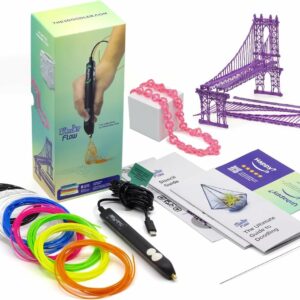
Mixed-material work, including wood effects: the 3Doodler Flow. It accepts wood-fill as well as PLA and ABS, all at 1.75 mm, with an adjustable range of 160–220 °C according to 3Doodler's FAQ and an LCD that shows the nozzle temperature in real time. A stencil book and starter filament come in the box. Wood-fill is more abrasive and more prone to clogging than plain PLA, so clean the nozzle after using it.
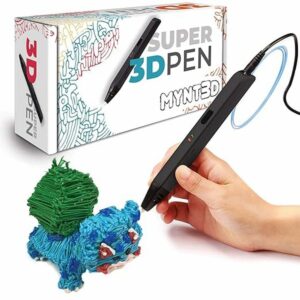
Long sessions with fewer interruptions: the MYNT3D Super. Its ultrasonic nozzle is, in MYNT3D's words, almost clog-proof, and flow is set on a stepless slider. It takes ABS and PLA at 1.75 mm. MYNT3D doesn't publish a temperature range. The starter filament is ABS, which gives off fumes when heated: draw in a ventilated room, or switch to PLA.
See how these two compare with the rest in the full pen ranking, or browse all 3D pens.
Projects that reward a better pen
Fine work shows the difference most. Try earrings and pendants, neat 3D lettering or plastic repairs. For carrying a pen, the seller of the Lebakort Hard Case lists the MYNT3D Super among the pens it fits; check the length of any other pen first.
Common questions
Which plastic gives the best finish for display pieces?
PLA is the easiest to control and comes in the widest choice of colours. ABS sets harder but wants a well-aired room, and wood-fill gives a wood-like look on pens that accept it, such as the Flow.
Does the 3Doodler Flow publish its temperature range?
Yes: 3Doodler's FAQ gives an adjustable 160–220 °C, and the pen's screen shows the live figure.
Can these pens weld or repair plastic?
They can fill cracks and rebuild small parts in PLA or ABS. Match the refill to the plastic of the object for the strongest bond.