
The most useful things to 3D print at home are small fixes for everyday annoyances: clips that stop packets spilling, bumpers that quieten cupboard doors, labels that survive the garden and holders that give tools a home. Here are twenty, grouped by room, each with the filament it needs (PLA, PETG or TPU) and a rough print length. One rule first: a printed part is not food-safe by default, so nothing here touches food directly.
The twenty prints at a glance
Print length is our planning guide for one copy at default settings, not a measured time: short means under two hours, medium an afternoon, long overnight or several plates. After slicing, Bambu Studio’s preview shows the estimated print time by layer and the filament weight.
| Room | Filament | Length | Watch out for | |
|---|---|---|---|---|
| 1. Bag clips | Kitchen | PETG | Short | Clip the packet, not the food |
| 2. Cupboard door bumpers | Kitchen | TPU | Short | Feed TPU from a spool holder |
| 3. Drawer dividers | Kitchen | PLA | Medium each | Measure the drawer |
| 4. Recipe or tablet stand | Kitchen | PLA | Medium | Keep it away from the hob |
| 5. Spice-jar rack | Kitchen | PLA | Long | Not above the cooker |
| 6. Cable clips | Desk | PLA | Short | Measure the cable |
| 7. Charging-cable protectors | Desk | TPU | Short | Print slowly |
| 8. Phone stand | Desk | PLA | Medium | Pick one with a cable slot |
| 9. Headphone hook | Desk | PETG | Medium | Carries a load daily |
| 10. Laptop stand | Desk | PETG | Long | Check it fits your bed |
| 11. Plant labels | Garden | PETG | Short | PLA won’t last outdoors |
| 12. Cane toppers | Garden | PETG | Short | Match the cane thickness |
| 13. Pot feet | Garden | PETG | Short | Print a set on one plate |
| 14. Hose guide | Garden | PETG | Medium | Long spike for soft soil |
| 15. Self-watering planter | Garden | PETG | Long | Use a saucer at first |
| 16. Screwdriver bit holder | Workshop | PETG | Short | Bits must sit snugly |
| 17. Battery organiser | Workshop | PLA | Short | AA and AAA slots differ |
| 18. Soft vice-jaw pads | Workshop | TPU | Medium | Dry the TPU first |
| 19. Wall-mounted tool holder | Workshop | PETG | Medium | Orientation and infill |
| 20. Modular drawer bins | Workshop | PLA or PETG | Long, in batches | Stick to one grid system |
PLA, PETG or TPU: which filament does each print need?
Ask where the print will live. Our rule: PLA for rigid things that stay indoors and cool, PETG for anything that takes knocks, gets wet or goes outside, TPU for anything that must bend, grip or cushion.
- PLA is the easiest to print. SUNLU gives it a heat deflection temperature of 55 ± 5 °C, so keep it out of hot cars and away from heaters. Prusa says it degrades under UV light, isn’t suited to outdoor use and breaks along its layers on impact.
- PETG is tougher and resists water, and Prusa rates it for most outdoor use below 80 °C. SUNLU gives its PETG a heat deflection temperature of 70 ± 5 °C.
- TPU is the flexible one. Bambu Lab says to dry it before use and rules soft TPU, including 95A, out of the AMS lite, so it feeds from a spool holder.
One catch for workshops: Bambu Lab rates PETG for its open-frame A series, but notes that a cold room can weaken the bond between layers, and suggests an enclosure for that reason. With an open-frame printer, keep it somewhere warm, not in a cold garage.
Useful things to 3D print, room by room
Kitchen
Prusa describes PLA and PETG as food-safe materials, yet doesn’t recommend them, or any other filament, for dishes or anything in direct contact with food: the tiny grooves between layers can harbour bacteria. These five stay on the outside of packets, doors and drawers. Wash them by hand and keep PLA away from the kettle, hob and dishwasher.
1. Bag clips. A hinged clip that seals an open packet of crisps or frozen peas. A print-in-place design comes off the plate already working. PETG, which flexes where brittle PLA cracks. Short.
2. Cupboard door bumpers. Soft pads that stop doors and drawers banging shut. TPU, a dozen to a plate. Short; steps below.
3. Drawer dividers. Dividers sized to your own drawer, so utensils stop sliding about. Measure the inside first. PLA, medium each; a long one needs a bigger bed or a design that joins in sections.
4. Recipe or tablet stand. Holds a tablet or cookbook upright where you can read it while you cook. PLA, medium, kept well away from the hob.
5. Spice-jar rack. A stepped rack that brings the jars at the back of a cupboard into view. Measure your jars. PLA for a cupboard, not the shelf above the cooker. Long.
Desk
6. Cable clips. Clips that hold charging cables at the edge of the desk, so they stop dropping down the back. PLA, short; steps below.
7. Charging-cable protectors. A flexible spiral that stops a cable bending sharply where it meets the plug. TPU, so it bends with the cable. Short.
8. Phone stand. An angled stand for video calls, with a slot so the phone charges while it stands. PLA, medium.
9. Headphone hook. A hook that screws or clamps under the desktop. PETG, because it carries a load every day. Medium.
10. Laptop stand. Raises a laptop to a comfortable height with room for air underneath. PETG gives more heat margin than PLA. Long; check the largest part against your build volume, as a full-size stand may need a bigger bed or a design in parts.
Phone stands, bit holders and tool racks also make good presents, and our Father’s Day print ideas sort them by print time.
Garden
11. Plant labels. Stakes with the plant’s name raised on top. PETG, short. To letter your own, try designing a simple stake in Tinkercad; steps below.
12. Cane toppers. Rounded caps for garden canes, so you don’t catch an eye when you bend over the bed. Measure the canes. PETG, short.
13. Pot feet. Small risers that lift patio pots off the paving so water drains away. Three per pot, all on one plate. PETG, short.
14. Hose guide. A spike with a rounded head at the corner of a bed, so the hose doesn’t drag across your plants. PETG, medium.
15. Self-watering planter. A pot with a reservoir underneath for a windowsill houseplant. PETG, long. Stand it on a saucer until you know it doesn’t leak.
Workshop
16. Screwdriver bit holder. A block with hexagonal holes for loose bits. PETG, short. If the design has a magnet pocket, Bambu Studio can pause at that layer so you drop a magnet in, and the holder will stick to a steel toolbox.
17. Battery organiser. A wall-mounted dispenser for AA and AAA cells, so you can see what’s left. PLA, short.
18. Soft vice-jaw pads. Pads that stop the jaws of a bench vice marking wood or soft metal. TPU, medium.
19. Wall-mounted tool holder. A rack or hooks for pliers, spanners or a drill. PETG, medium. It carries weight, so use the designer’s print orientation and check how much infill a load-bearing part needs.
20. Modular drawer bins. Bins that sit on a printed base grid, one per screw size; Gridfinity is one such system to search for. Print the base and a few bins, then add more. PLA for a desk drawer, PETG for a garage toolbox. Long.
Once the practical jobs are done, the same printer will turn out printed Halloween decorations in the autumn.
What you need
A printer that handles PLA, PETG and TPU
Bambu Lab lists PLA, PETG and TPU as compatible with its open-frame A series, so all twenty suit one. If you haven’t chosen a printer yet, start with our ranking of home 3D printers.
The Bambu Lab A1 mini arrives assembled, calibrates itself and has a 180 × 180 × 180 mm build volume. That covers the clips, bumpers, labels, hooks and holders; long dividers or a laptop stand would need a design in parts.
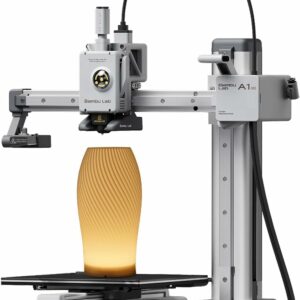
Enough bed for clips, bumpers, labels, hooks and bit holders, and it arrives ready to print.
The Bambu Lab A1 Combo pairs the 256 × 256 × 256 mm A1 with the AMS lite, which feeds up to four colours in one print: handy for colour-coded bins and labels. Bambu Lab lists a 53–58 mm hub hole for AMS lite spools, and SUNLU’s is 6.3 cm, so feed SUNLU spools from the spool holder or choose spools that fit. A label with raised names changes colour once, where the letters start, so the second colour costs little extra.
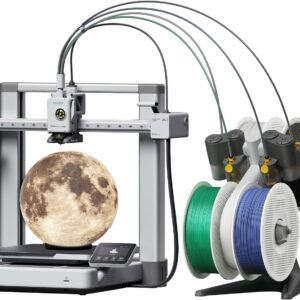
A 256 mm bed for drawer dividers, laptop stands and planters, plus the AMS lite for labels and bins in up to four colours.
Three spools of filament
A spool each of SUNLU PLA Filament, SUNLU PETG Filament and SUNLU TPU 95A Filament covers all twenty. Use your printer’s profiles or SUNLU’s settings, such as 240–260 °C for the PETG. Prusa warns against printing PETG on smooth PEI, where it can stick too hard; Bambu Lab lists its textured PEI plate for PETG. For other colours, browse the printer filaments we list.
A model and its licence
Most of these designs already exist in the free libraries; our guide to free model libraries compares MakerWorld, Printables and Thingiverse. Respect each licence, and to resize or relabel a part, pick a model whose licence allows changes.
Step outlines for three of the prints
Cable clips sized to your cables (PLA)
- Measure each cable, and the desk edge if the clip grips it.
- Choose a clip made for that size, or one you can resize.
- Slice with your PLA profile and check the time in the preview.
- Print one clip, test the fit and adjust the size.
- Print the rest on one plate and fix them with the pads or screws the design calls for.
Plant labels with raised names (PETG)
- Keep the names short, so the letters stay large.
- Pick a label blank whose licence allows changes, or design your own stake.
- Add each name as raised text, then slice with your PETG profile on a textured PEI plate.
- Print the set and wait until the plate has cooled before removing the labels.
- Push each label well into the soil beside its plant.
Cupboard door bumpers (TPU)
- Dry the TPU at the temperature on the filament’s own data sheet.
- On an A1 Combo, feed it from a spool holder, not the AMS lite.
- Arrange a dozen bumpers on one plate and slice at SUNLU’s slower setting, 190–210 °C at 50–80 mm/s.
- Let the plate cool, then peel the bumpers off.
- Clean the door frame and fix each bumper with a small adhesive pad.
Common questions
Can I 3D print things that touch food?
Not with an ordinary printed part. Prusa doesn’t recommend PLA, PETG or any other filament for dishes or anything in direct contact with food, because bacteria can grow in the grooves between layers. Keep kitchen prints to clips, dividers, stands and bumpers.
Will PLA prints last outdoors?
Not for long: Prusa says PLA degrades under UV light, while PETG suits most outdoor use below 80 °C. For parts in full sun, Prusa describes ASA as more UV-resistant, but it needs an enclosure, and Bambu Lab doesn’t recommend it on open-frame printers.
What should I print first?
Something small and quick that you will use, such as a cable clip or a bag clip. A short PLA print shows whether the size fits before you commit to a long job.
Can I sell things I print from free models?
Only if the model’s licence allows commercial use. Creative Commons defines non-commercial as not primarily intended for commercial advantage or payment, so an NC model can’t be sold. Printing it for your own home is fine.
Sources
- PLA — Prusa Knowledge Base
- PETG — Prusa Knowledge Base
- ASA — Prusa Knowledge Base
- Filament guide: printer, nozzle, AMS and build plate compatibility — Bambu Lab Wiki
- View slicing information — Bambu Lab Wiki
- Sharing Openly, Sharing Globally (CC licences) — Creative Commons