

The full guide to the SUNLU PETG
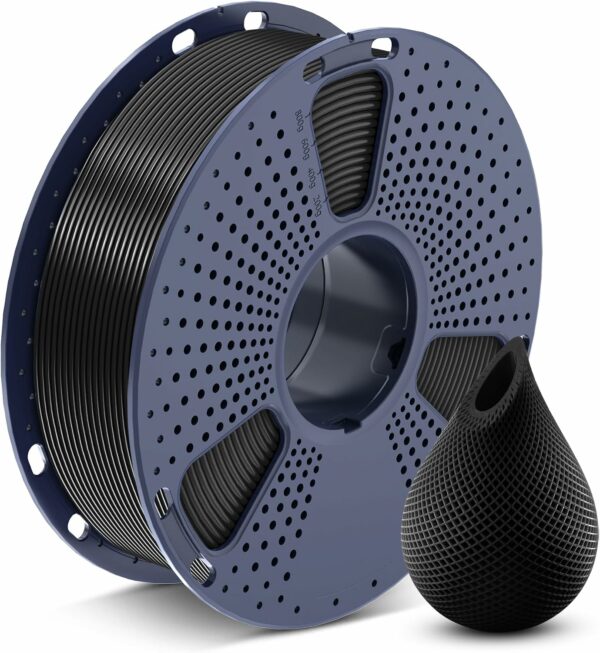
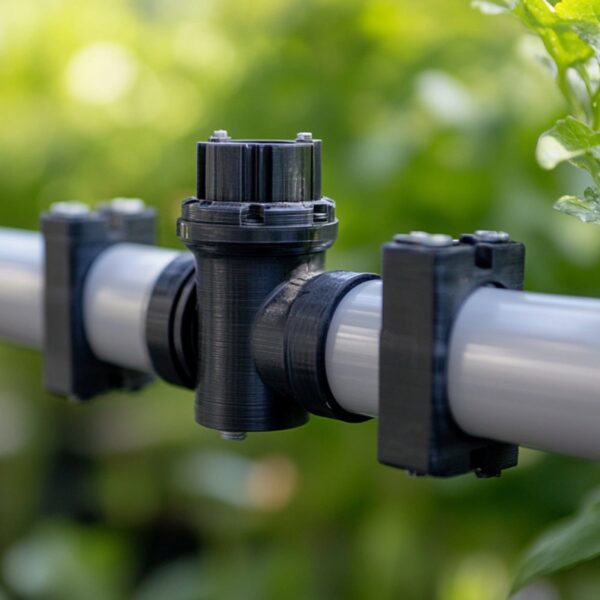
SUNLU PETG Filament is the 1.75 mm, 1 kg spool to reach for when a part has a job to do: a bracket, a hook, a plant-pot tray or a cover that gets wet. It is tougher than PLA and holds its shape at higher temperatures, and it shrugs off water and many household chemicals. In return it prints hotter, strings more readily and wants drier storage.
Key specifications
| Material | PETG |
|---|---|
| Diameter | 1.75 mm, ±0.02 mm tolerance according to SUNLU |
| Net weight | 1 kg |
| Nozzle temperature | 240–260 °C, at up to 300 mm/s |
| Bed temperature | 60–70 °C (SUNLU’s wiki widens this to 50–70 °C) |
| Retraction | 0.8–1.2 mm at 30–40 mm/s |
| Heat deflection temperature | 70 ± 5 °C; glass transition 79.4 °C |
| Tensile strength | 48 ± 10 MPa; flexural strength 70 ± 10 MPa |
| Elongation at break | 11 ± 5 % |
| Density | 1.27 g/cm³ |
| Chemical resistance | Good against water, weak acids and bases, and petrol; poor against strong acids and bases and ketones such as acetone |
| Drying | 60–65 °C for 6–8 hours |
| Spool dimensions | Not published by the maker |
Who it suits — and who should pick something else
- A good fit for practical prints: wall hooks, tool holders, clips, enclosures for electronics and anything that may get damp. SUNLU points to its toughness, its water resistance and its resistance to many chemicals.
- A good fit for a fast printer. SUNLU rates it for speeds up to 300 mm/s, and its test pieces were printed at 150 mm/s and 255 °C.
- Look elsewhere for your very first prints. The SUNLU PLA Filament runs cooler and strings less while you learn your printer.
- Look elsewhere for parts that need to stretch or grip. That is a job for TPU.
What’s in the box
One 1 kg spool of 1.75 mm PETG in your chosen colour. SUNLU’s quick-start guide describes its filament as vacuum-sealed in a bag with a desiccant pack; keep both for storing the spool later.
Getting started
- Dry the spool unless the vacuum bag is still tight. SUNLU’s usage guide gives 60–65 °C for 6–8 hours for PETG.
- Check your build plate’s guidance. PETG can bond very hard to smooth PEI, so follow your printer maker’s advice on which surface to use, and let the plate cool before removing the part.
- Start from a generic PETG profile, with the nozzle at 250 °C (the middle of SUNLU’s range) and the bed at 70 °C, then adjust in 5 °C steps.
- Keep the part cooling fan on, as SUNLU’s data sheet indicates, and set retraction to 0.8–1.2 mm at 30–40 mm/s.
- Run a small test such as a calibration cube or a stringing test before a long job.
Which printers it suits
All four filament printers we list can reach PETG’s 240–260 °C. The Flashforge Adventurer 5M tops out at 280 °C and names PETG among its materials; the Bambu Lab A1 and A1 mini reach 300 °C; the Elegoo Centauri Carbon reaches 320 °C and lists PETG too. SUNLU’s data sheet gives normal room temperature as the printing environment, so an enclosure isn’t required.
Storage and moisture
PETG picks up moisture, and wet PETG shows it quickly: popping at the nozzle, fine hairs between parts and rough surfaces. SUNLU’s wiki says a spool left open to the air for more than 48 hours should be dried for 4–6 hours before use. Store it sealed with desiccant, out of direct sunlight; SUNLU’s data sheet notes the material may yellow under UV light. A one-spool heater such as the SUNLU FilaDryer S2 reaches 70 °C, enough for SUNLU’s PETG drying range. If strings persist on a dry spool, work through retraction first, then temperature.
How it compares
- Against SUNLU PLA: 240–260 °C on the nozzle instead of 200–240 °C, a heat deflection temperature of 70 ± 5 °C instead of 55 ± 5 °C, and 48 ± 10 MPa tensile strength instead of 40 ± 6 MPa. Our PLA vs PETG guide sets out when the extra effort pays.
- Against the SUNLU TPU 95A Filament: PETG is stiff where TPU is rubbery. TPU stretches over 900 % before breaking, according to SUNLU, against 11 ± 5 % for PETG.
For parts that sit outside all year, compare it with ASA in our guide to outdoor filament choices, and browse the filament and resin collection for the rest of the range.
Common questions
What temperature does SUNLU PETG print at?
SUNLU gives 240–260 °C for the nozzle and 60–70 °C for the bed. Its own test parts were printed at 255 °C and 150 mm/s. Start in the middle and adjust in small steps.
Does PETG need an enclosure?
No. SUNLU’s data sheet lists normal room temperature as the printing environment, and open-frame printers such as the Bambu Lab A1 are suited to PETG. Keep the printer out of draughts all the same.
Can SUNLU PETG be used outdoors?
SUNLU describes it as suitable for outdoor and mechanical parts, thanks to its water and chemical resistance. The same data sheet notes that it may yellow under UV light, so expect colour change on parts in full sun.
Why is PETG so stringy?
Moisture is the first suspect: dry the spool at 60–65 °C before changing anything else. Then check retraction against SUNLU’s 0.8–1.2 mm at 30–40 mm/s, and try lowering the nozzle temperature by 5 °C.
Can acetone clean or smooth PETG?
SUNLU rates its PETG as poor against ketones, which include acetone. Keep acetone away from finished parts. Water is fine: SUNLU rates PETG as good against it.
Specifications as published by SUNLU on its official pages, checked November 2026. Where a figure isn’t published, we say so.